


Education Coalition Of Zimbabwe (ECOZI)
Education Coalition Of Zimbabwe (ECOZI)
Education Coalition of Zimbabwe: Uniting Civil Society Behind Every Zimbabwean Child's Right to Learn
The Education Coalition of Zimbabwe, known as ECOZI, is the collective voice of civil society in Zimbabwe's education sector, a nationwide coalition of 75 organisations working together to ensure that quality, free basic education reaches every Zimbabwean child, especially those most at risk of being left behind. Since 2009, ECOZI has coordinated advocacy, research and policy engagement that individual organisations could never achieve alone, holding government, donors and the education system itself accountable to the promise of education for all. Fonseca connects Harare businesses and donors to this vital coordinating body behind Zimbabwe's education movement.
Who They Are
Who They Are
ECOZI was established in June 2009 and is registered in Zimbabwe as a Private Voluntary Organisation. It brings together Non-Governmental Organisations, International Non-Governmental Organisations, Teacher Unions, Faith Based Organisations, Community Based Organisations and Civil Society Organisations, all sharing a common interest in Zimbabwe's education sector. ECOZI is deliberately apolitical and non-partisan, uniting this diverse membership around one common pursuit: the right to quality, free basic education for all, with particular emphasis on public-funded education.
ECOZI's vision is a society with access to quality, inclusive, equitable, lifelong and resilient education, delivered in a safe environment. Its mission is to coordinate and facilitate civil society organisations and all education actors in advocating for education policy making, implementation and review, so that access to quality, equitable and lifelong learning opportunities genuinely reaches everyone.
Who Makes Up the Coalition
Who Makes Up the Coalition
ECOZI is a membership-driven organisation currently made up of 75 member organisations working in the education sector, spread across all ten of Zimbabwe's provinces. The coalition is democratically governed, with an annual General Assembly serving as its highest decision-making body, giving mandate to a nine-member National Executive Committee elected every two years from among the membership. A secretariat based in Harare, headed by an Executive Director, coordinates the coalition's day-to-day work.
Members are organised into six thematic committees, each member belonging to at least one: Gender Equality and Inclusive Education, Education Financing, Education-in-Emergencies, Quality and Transformative Education, Lifelong Learning, and Foundational Learning. ECOZI also maintains active provincial chapters in Bulawayo, Manicaland, Mashonaland Central, Mashonaland West, Masvingo, Matabeleland North, Matabeleland South, Mashonaland East and Midlands, ensuring the coalition's advocacy is genuinely grounded in the realities of communities across the entire country, not concentrated only in Harare.
The Challenge: An Education System Under Strain
The Challenge: An Education System Under Strain
Zimbabwe's education sector faces a range of persistent challenges that make coordinated civil society advocacy essential. Chronic underinvestment in public education financing has left schools and learners without the resources needed to guarantee genuinely free and equitable basic education, despite this being a constitutional and international commitment. Vulnerable, hard-to-reach and marginalised children, including those in rural and remote provinces, children with disabilities, and girls facing particular barriers to staying in school, are consistently at the greatest risk of falling through the gaps in policy implementation.
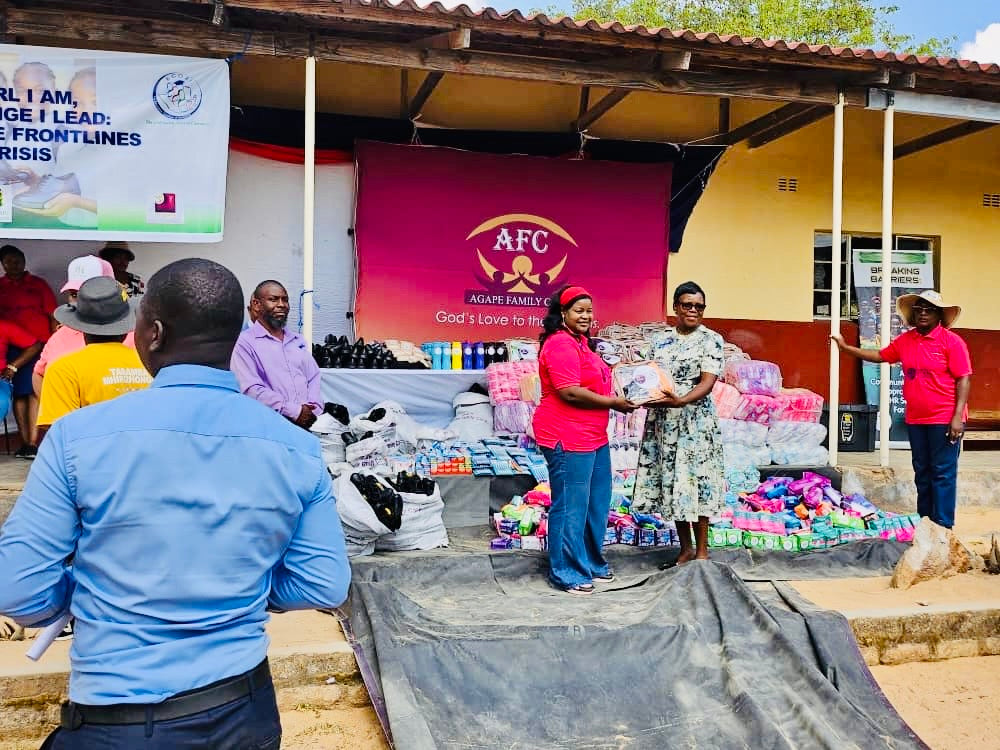
Menstrual poverty remains a significant, often under-discussed barrier to girls' education in Zimbabwe, directly affecting school attendance, participation and dignity for adolescent girls across the country. Meanwhile, education financing dialogues convened by ECOZI have highlighted a broader structural issue: the persistent gap between the education financing commitments made by government and international partners, and the funding that is actually and reliably disbursed to schools and learners on the ground.
What ECOZI Does
What ECOZI Does
Advocacy for Education Policy: ECOZI's core strength lies in coordinating the civil society voice on education policy, participating directly in government policy and programme formulation, and reviewing government policies and interventions to ensure they genuinely benefit all learners, especially the vulnerable, hard-to-reach and marginalised.
Championing Education Financing: The coalition advocates for increased, innovative and more efficient education financing, from both the Government of Zimbabwe and donor partners, working to ensure that funding commitments translate into real resources reaching real classrooms, so that no child is left behind for lack of funding.
Research and Evidence-Based Lobbying: ECOZI carries out policy research as a foundation for its advocacy, using evidence rather than assumption to lobby government on policy gaps, formulation and implementation, and to hold the education system accountable to its own stated commitments.
Joint Sector Planning and Monitoring: ECOZI works directly with the Ministry of Primary and Secondary Education and the Ministry of Higher and Tertiary Education, Innovation, Science and Technology Development, alongside donor partners and international agencies, participating in joint sector planning, joint monitoring and sector reviews that shape the direction of Zimbabwean education policy.
Advancing Gender and Inclusive Education: Drawing on the diverse expertise of its membership, ECOZI brings dedicated focus to gender and disability issues within the education sector, including recent work establishing Zimbabwe's National Menstrual Health Management Network to tackle the barriers menstrual poverty creates for girls' school attendance.
Commemorating and Championing Global Education Days: ECOZI actively marks key international education dates, including International Day of Education, World Teachers' Day, World Literacy Day, the Day of the African Child, and the International Day of the Girl Child, using each as a platform to spotlight specific gaps and successes in Zimbabwe's education system.
A National and Global Network
A National and Global Network
ECOZI's influence extends well beyond Zimbabwe's borders through its memberships in key regional and global education networks. It holds full voting rights within the Africa Network Campaign for Education for All (ANCEFA), a regional coalition uniting 35 national education coalitions across Africa, and within the Global Campaign for Education (GCE), a worldwide coalition of more than 100 national education coalitions spanning three regional networks. ECOZI is also a member of the National Association of Non-Governmental Organisations in Zimbabwe (NANGO), the International Parliamentary Network for Education, the Scholars at Risk Network, which works to protect threatened scholars and defend academic freedom worldwide, and the Collective Consultation of NGOs on Education 2030 Forum, a key global mechanism for dialogue between NGOs and education policymakers. Having previously worked on the Education for All goals and the Millennium Development Goals, ECOZI's current advocacy is oriented around the UN Sustainable Development Goal 4, to ensure inclusive and quality education for all and promote lifelong learning.
Partners and Supporters
Partners and Supporters
ECOZI's work has been made possible through the support of a range of international funding partners. The German Backup Initiative – Education in Africa, delivered through GIZ, has supported ECOZI's coalition work, alongside the Africa Network Campaign on Education for All (ANCEFA) and the Global Campaign for Education. The United Nations Children's Fund (UNICEF) is both a funding partner and a direct collaborator on joint sector planning and monitoring. World Vision UK, the Roger Federer Foundation, and Education Out Loud, a mechanism of the Global Partnership for Education focused on advocacy and accountability, have each supported ECOZI's programming. The Norwegian Students' and Academics International Assistance Fund (SAIH) and Oxfam IBIS, through Oxfam's Zimbabwe country programme, round out ECOZI's core funding partnerships, together enabling a coalition that keeps education policy advocacy running consistently across all ten of Zimbabwe's provinces.
Why Your Support Matters
Why Your Support Matters
Every contribution channelled through Fonseca to ECOZI helps sustain the coordinated, evidence-based advocacy that keeps education policy honest in Zimbabwe, pushing government and donors alike to turn financing commitments into real resources for real classrooms, and ensuring that vulnerable, hard-to-reach and marginalised children are never an afterthought in national education planning. Supporting ECOZI means investing not in a single school or programme, but in the coalition holding the entire system accountable, so that the right to quality education reaches every Zimbabwean child, in every province, regardless of where they were born or what challenges they face.
Share


How They Work
-
Coordinating, Not Duplicating
Rather than running competing programmes, ECOZI's core value lies in coordinating the voice and efforts of 75 diverse member organisations into unified, more powerful advocacy than any single member could achieve alone.
-
Embedded Across All Ten Provinces
Through its nine provincial chapters, ECOZI ensures that national-level advocacy stays genuinely grounded in the realities faced by schools, teachers and learners far beyond Harare, from Matabeleland to Manicaland.
-
A Seat at the Government Table
As a full voting member of Zimbabwe's Education Coordinating Group, chaired by the Minister of Primary and Secondary Education, ECOZI sits alongside the Permanent Secretary, senior ministry officials, and major donor agencies including FCDO, UNICEF, UNESCO and the World Bank, giving civil society a direct, structured voice in reviewing and monitoring national education policy implementation.