FHI 360
FHI 360
FHI 360: Four Decades of Building Healthier, More Resilient Communities in Zimbabwe
FHI 360 has worked in Zimbabwe since 1985, longer than most international development organisations operating in the country today, delivering evidence-based programmes that span HIV prevention and treatment, food security, and maternal, newborn and child health. As a global nonprofit with more than 50 years of experience translating research into real-world results, FHI 360 brings scientific rigor and deep local partnership together to reach the Zimbabweans who need it most. Fonseca connects Harare businesses and donors to this trusted, long-standing partner in the country's public health response.
Who They Are
Who They Are
FHI 360, originally founded in 1971 as Family Health International, is a global nonprofit organisation headquartered in Durham, North Carolina, that mobilises research, resources and relationships so that people everywhere can access the opportunities they need to lead full, healthy lives. Registered in the United States as a 501(c)(3) public charity, FHI 360 now operates in more than 60 countries, employing a multidisciplinary, evidence-based approach across health, education, economic development, and humanitarian response.
FHI 360's presence in Zimbabwe stretches back to 1985, and since 2015 the organisation has led a significant expansion of its country programme, focused on three interlocking priorities: HIV care and treatment, food security, and maternal, newborn and child health. FHI 360's approach is distinctive in that it does not simply deliver aid directly, it works as a technical partner alongside Zimbabwean organisations, strengthening their systems, capacity and quality of care so that local institutions become stronger and more self-sufficient through every project cycle, not just recipients of a service that ends when funding does.
The Challenge
The Challenge
Zimbabwe continues to carry one of the more significant HIV burdens in Southern Africa, a region that has borne the brunt of the global epidemic for four decades. Even as antiretroviral treatment has become more widely available, ensuring that people living with HIV actually know their status, start treatment promptly, and stay engaged in care over the long term remains a persistent challenge, particularly among adolescent girls and young women, who continue to face disproportionately high rates of new infection.
Alongside the HIV epidemic, Zimbabwe's rural provinces face recurring food insecurity driven by erratic rainfall and economic pressure, undermining household stability and, in turn, health outcomes for entire families. Maternal, newborn and child health services in provinces like Manicaland have historically been constrained by limited access to emergency obstetric care, weak community health systems, and deeply rooted cultural and religious dynamics that shape whether families seek formal medical care during pregnancy and childbirth at all. The COVID-19 pandemic further strained an already stretched health system, leaving intensive care units and frontline health providers under significant pressure just as demand for critical care equipment and training spiked.
Our Global Track Record
FHI 360 has spent more than 50 years developing solutions to global health and development challenges, beginning its worldwide response to HIV/AIDS in 1986 and expanding since into family planning, tropical and infectious disease control, maternal and newborn health, education, and economic opportunity. The organisation now operates in more than 60 countries and all U.S. states and territories, employing roughly 2,200 people worldwide, work that in Zimbabwe specifically traces back to 1985, giving the organisation four decades of continuous, on-the-ground experience navigating the country's particular health and development landscape.
Partners and Supporters
FHI 360's work in Zimbabwe has been carried out with funding from the U.S. Agency for International Development (USAID) across multiple projects, and in direct partnership with Zimbabwean implementing organisations including Africaid and Zimbabwe Health Interventions (ZHI), as well as with CARE International on food security programming in Manicaland and Masvingo. Globally, FHI 360's funders and partners include the FHI Foundation, the Rockefeller Foundation, the Robert Wood Johnson Foundation, the W.K. Kellogg Foundation, the Johnson & Johnson Foundation, the Pfizer Foundation, the Walmart Foundation, the LEGO Foundation, the GHR Foundation, and PATH, among many other foundation, government and nonprofit partners supporting its work across the more than 60 countries in which it operates.
Why Your Support Matters
Every contribution channelled through Fonseca to FHI 360's Zimbabwe programme helps sustain four decades of continuous, trusted work supporting the country's response to HIV, strengthening maternal and newborn survival in provinces like Manicaland, and building household food security in Masvingo and beyond. This is not short-term, one-off assistance, it is technical partnership designed to leave Zimbabwean institutions and communities stronger and more capable long after any individual project ends. Supporting FHI 360 means investing in an organisation with the scientific rigor, local partnerships and sheer staying power to keep meeting Zimbabwe's most pressing health and development challenges, one evidence-based programme at a time.
Share

What FHI 360 Does in Zimbabwe
Expanding HIV Prevention and Treatment
Through the Accelerated and Comprehensive HIV Care for Epidemic Control in Zimbabwe (ACCE) project, delivered in partnership with Africaid and Zimbabwe Health Interventions (ZHI) and funded by USAID, FHI 360 works to prevent new HIV infections by expanding access to pre-exposure prophylaxis (PrEP), identify more people living with HIV through risk screening, self-testing and targeted case finding, and ensure continuity of high-quality care through differentiated service delivery models tailored to different patients' needs. FHI 360 also serves as a technical partner to ZHI, strengthening quality assurance systems, improving accountability for community-based outreach workers, boosting tuberculosis preventive therapy uptake, and piloting decentralised, home-delivery models for drug distribution that make treatment easier for patients to access and stay on.
What FHI 360 Does in Zimbabwe
Reducing HIV Risk Among Young Women
The Re-Ignite, Innovate, Sustain, and Empower (RISE) project applies USAID's DREAMS approach, Determined, Resilient, Empowered, AIDS-free, Mentored and Safe, specifically to reduce HIV risk among adolescent girls and young women, one of the populations most vulnerable to new infection in Zimbabwe.
What FHI 360 Does in Zimbabwe
Sustaining Epidemic Control
The Meeting Targets and Maintaining Epidemic Control (EpiC) project works to help Zimbabwe achieve and sustain control over its HIV epidemic. During the COVID-19 pandemic, EpiC directly supported health facilities strained by the crisis, supplying ventilators to intensive care units and training health providers to use that equipment safely and effectively, a reminder that strong HIV infrastructure and strong general health infrastructure are deeply intertwined.
What FHI 360 Does in Zimbabwe
Improving Maternal, Newborn and Child Health
The Mhuri/Imuli project, funded by USAID, worked to improve the quality and availability of maternal, newborn and child health services in Manicaland province. The project expanded access to lifesaving emergency obstetric and newborn care, strengthened community health systems for integrated care, and engaged religious and cultural leaders, men, and young people directly, recognising that improving maternal health outcomes requires shifting community norms, not just clinical capacity. Mhuri/Imuli also advanced continuous quality improvement approaches to help ensure services stayed consistently high-quality over time, rather than improving briefly and then slipping backward.
What FHI 360 Does in Zimbabwe
Strengthening Food Security
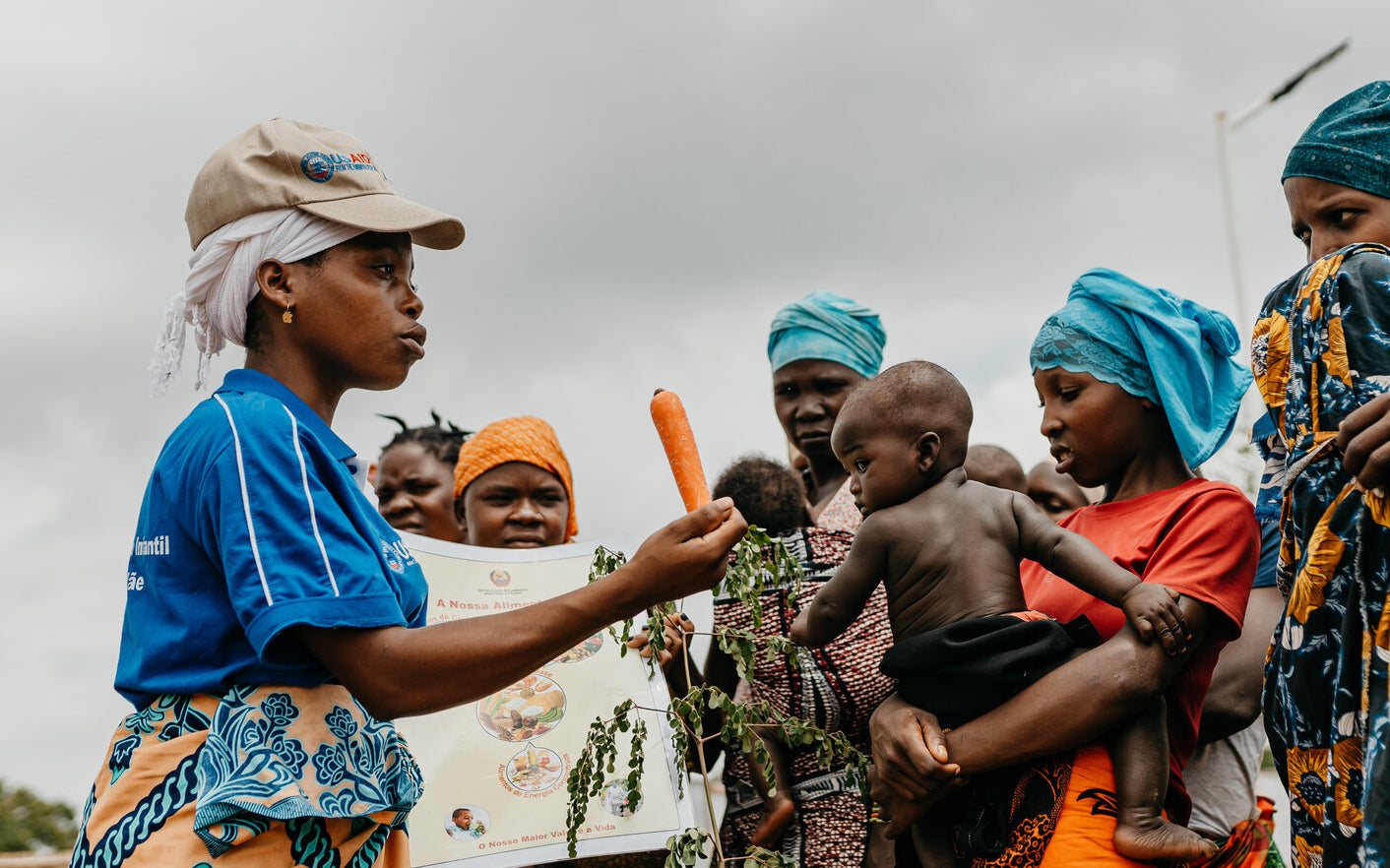
In Manicaland and Masvingo provinces, FHI 360 partners with CARE International on the Takunda food security programme, serving as the project's technical lead on social and behaviour change, helping ensure that improvements in food access are matched by the community-level shifts in practice and behaviour needed to make those gains stick.
How They Work
-
Technical Partnership, Not Just Delivery
Much of FHI 360's role in Zimbabwe is as a technical partner to local implementing organisations like Zimbabwe Health Interventions, strengthening their systems and quality of care from the inside, rather than running parallel programmes that bypass local institutions entirely.
-
Research-Driven, Evidence-Based Design
FHI 360's programmes are built on rigorous research and scientific evidence, ensuring that resources are directed toward interventions proven to work, rather than approaches based on assumption alone.
-
Multi-Sector Integration
By working simultaneously across HIV care, food security, and maternal and child health, FHI 360 recognises that these challenges are rarely isolated, a food-insecure household is often also a household with worse health outcomes, and designs its Zimbabwe programme to reflect that interconnected reality.